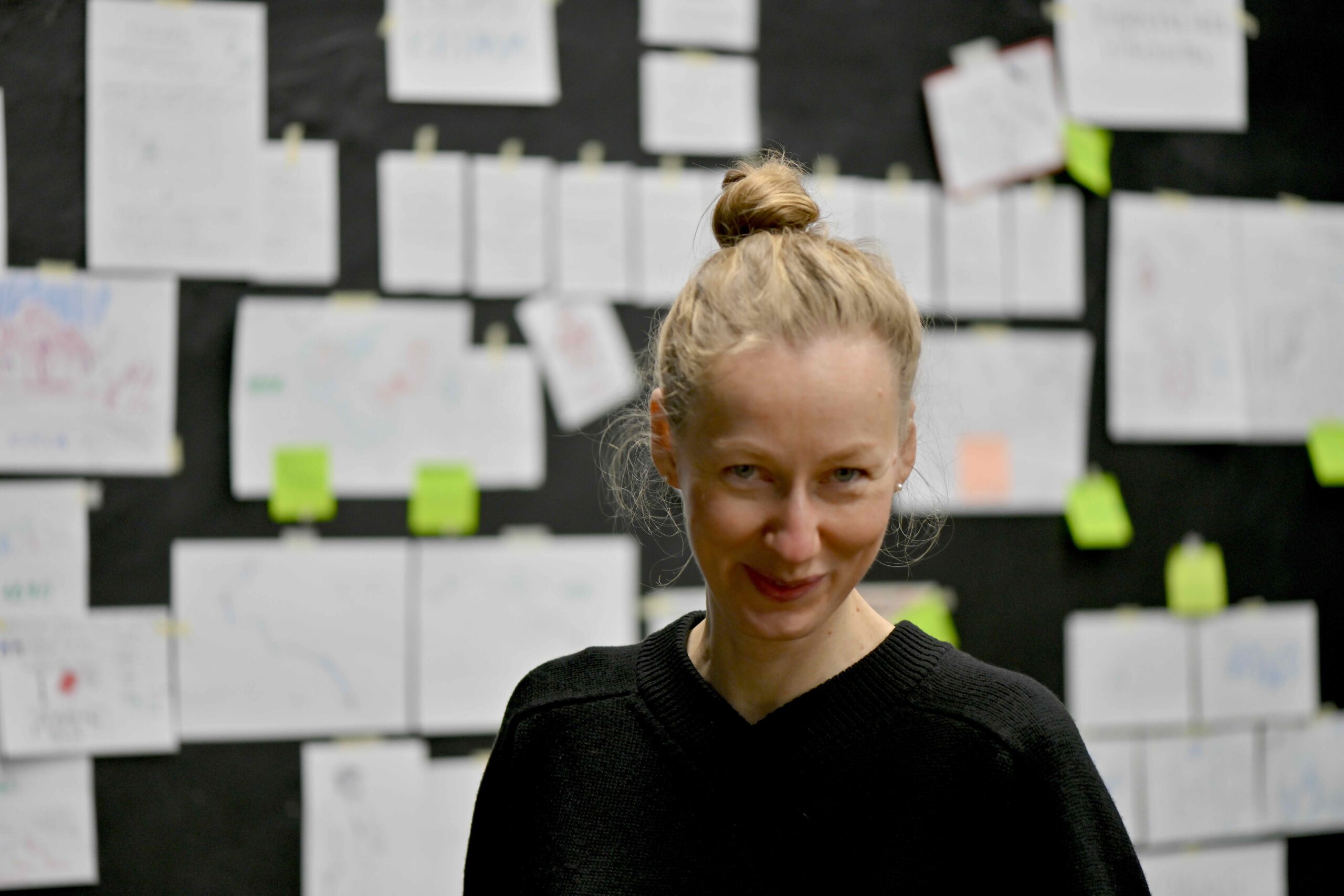
Kristina Norman | “Artists Are Present” (estonia)
09.11 – 22.11.2026
Kristina Norman (b. 1979) is an artist based in Tallinn whose interdisciplinary work includes video installations, sculptures, documentary films, performances, and projects in public space. Her practice explores questions of collective memory and forgetting, the use of public space, the connections between botany and colonialism, and the subtle realm of body politics that crosses the boundaries between public and private. Norman’s works are marked by a deep sensitivity to human struggles, offering viewers a chance for personal recognition.
Her most recent work, The Dew Point, is a documentary performance exploring the ambiguous value of security in times of war. At the heart of the project lies Norman’s personal process of renovating a Soviet-era sauna in the Estonian countryside with her father, who was a conscript in the Soviet army in 1977-1978. Combining video documentation of the construction process with a retelling of her father’s stories through a live performer, the performance opens up the liminal experience of the Baltic region—both mental and physical—in which the dew point marks a potential moment of poetic transformation.
Norman has represented Estonia twice at the international Venice Art Biennale, in 2009 and 2022. Her 2019 performance Lighter Than Woman received wide recognition and acclaim.
Collage as Memory: Documentary Storytelling in Image and Text
The workshop focuses on collage as a means of exploring the points of contact between personal and collective memory. It is based on my own artistic practice: we will examine how a central artistic image or object can function as an “anchor” around which to construct a documentary narrative. Together with the students, we will explore how new meanings emerge through the interplay of fragments.
Each participant will create a collage on the theme “My Family Story.” The task is to tell a personal story about their family using images, words, and sentences found in a selection of randomly chosen newspapers and magazines.
By the end of the workshop, each participant will have created a personal collage centred on a story, memory, or event connected to their family. The work does not have to offer a single, definitive interpretation of the story. What matters is that it conveys the artist’s relationship to the material, as well as the process through which a personal story was assembled from found fragments.