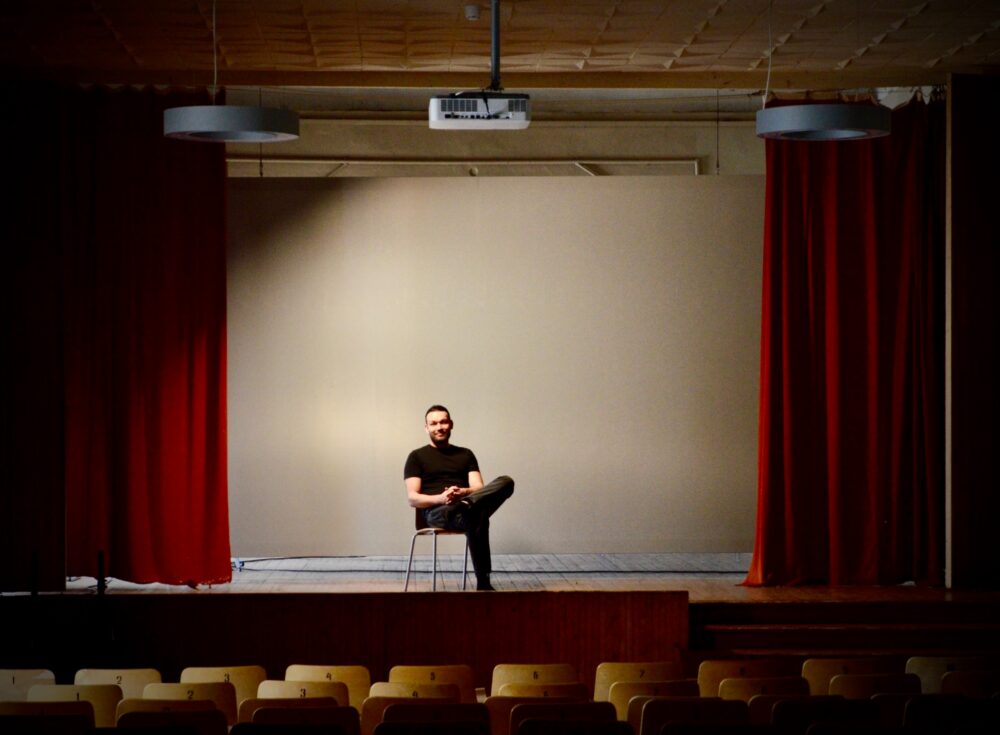
Jaakko Autio stayed at the Narva Art Residency in the spring of 2022 and was supported by a residency grant from the Finnish Cultural Foundation (SKR). In the following essay, he looks back on the residency, which took place at turbulent times, and his artistic practice that followed.
Hereby, we encourage Finnish citizens and artists living in Finland to apply for the Finnish Cultural Foundation grant for 2027. The August application round is open from 10 to 31 August 2026. More information: https://www.nart.ee/en/finnish-cultural-foundation-residency-grant-at-nart/
I — NARVA, SPRING 2022
I arrived at Narva Art Residency in spring 2022, only weeks after Russia’s full-scale invasion of Ukraine had begun. I knew very little about Narva. I had come with an artistic idea, but the reality around me made it impossible to remain abstract. The residency house was shared by artists and people displaced by the war. Across the river was Russia. Around us, the former Kreenholm textile factory carried the many layers of Narva’s history in its walls.
I began to understand the border not as a line on a map, but as something lived: a pressure that passes through language, memory, identity and the body. This became the starting point of the Border Series, a four-part body of work that continued from 2022 until 2025.
II — ON THE BORDER
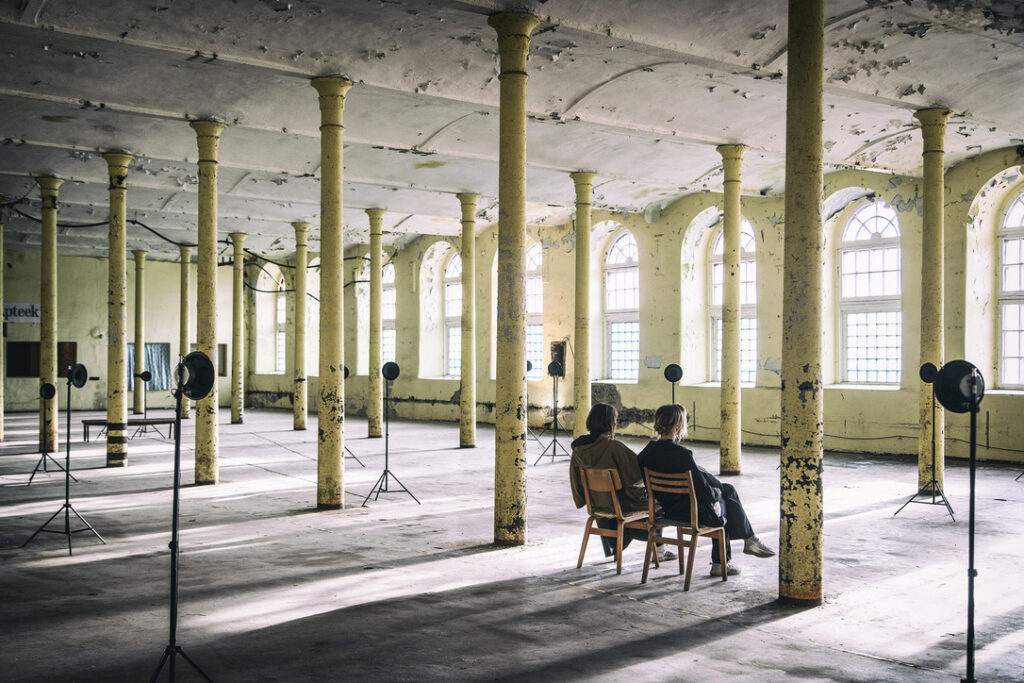
The first work, On the Border, was created with forty singers from Estonian, Estonian-Russian and Finnish communities. Together with composer Mattila, I developed a wordless interpretation of Maamme / Mu Isamaa, the national anthem whose melody is shared by Finland and Estonia. Each singer was recorded individually: singing, breathing and speaking. NART’s film room became one of our recording spaces.
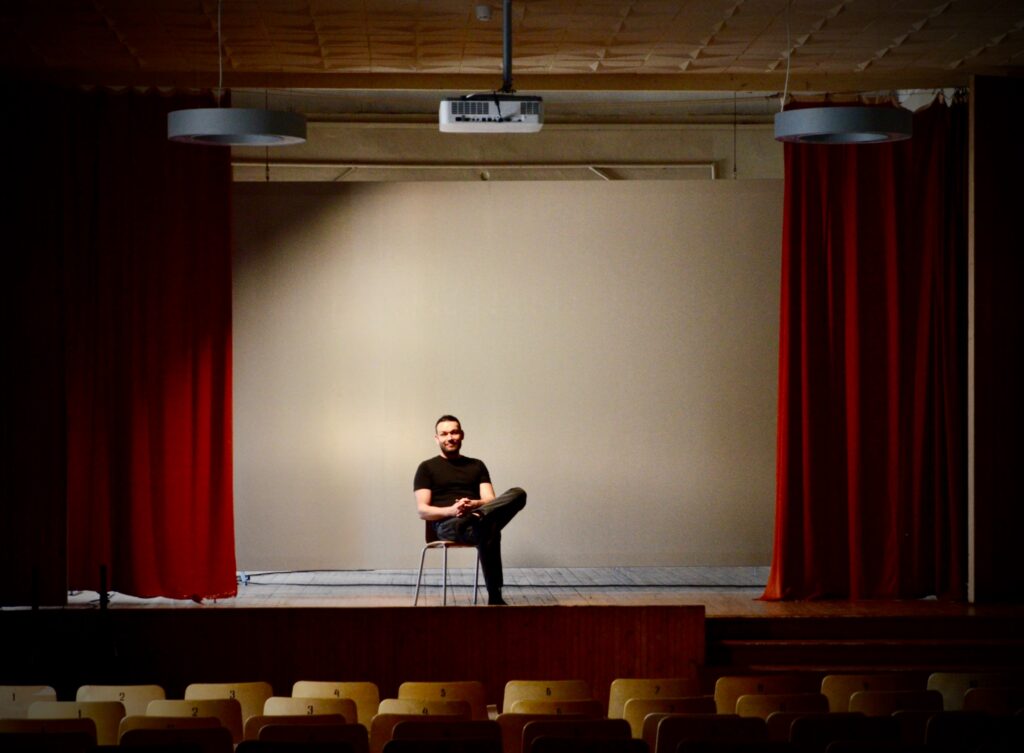
Autio in the recording space, Narva, 2022. Photo: Jaakko Autio.
At Kreenholm, the voices were distributed across forty loudspeakers. Every singer had their own speaker. A visitor could approach one voice closely and hear a single breath, then step back into a collective field in which it was no longer possible to determine who was singing what. Identity did not disappear; it became audible as proximity.
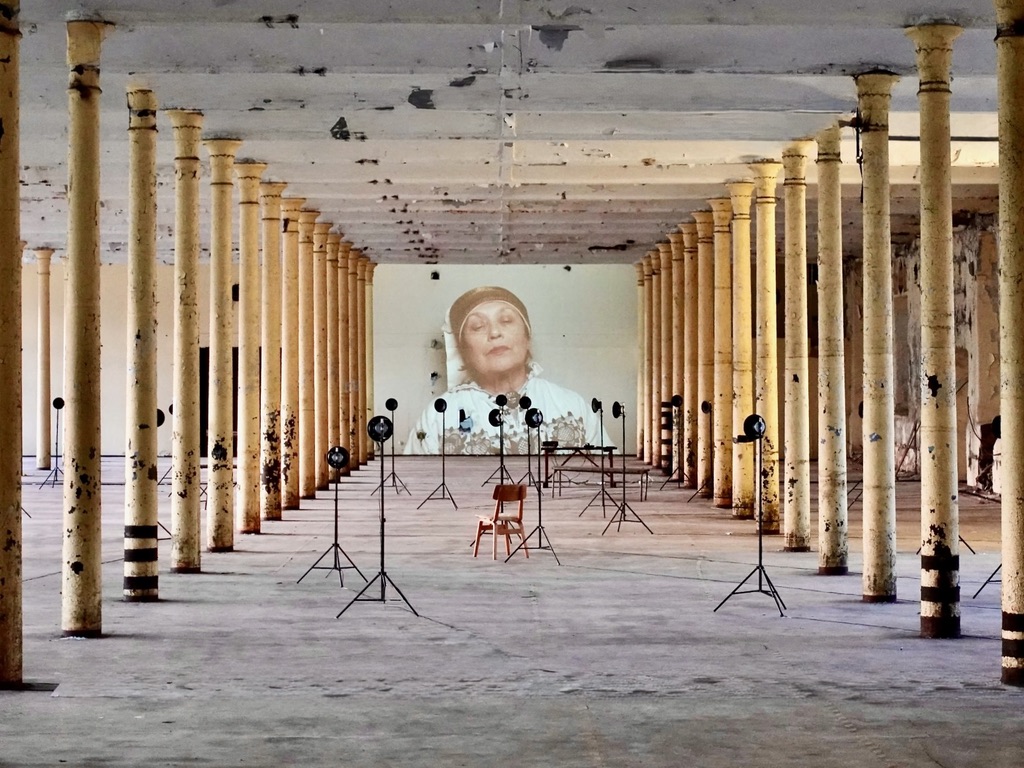
Projected participant portrait, Kreenholm, 2022. Photo: Jaakko Autio.
I also filmed each participant alone. I asked them to choose a favourite song, put it on and listen. Then I left the room. I did not want them to perform for me. The resulting portraits held something I could not have planned: private memories, vulnerability and the quiet ways in which music allows a person to return to themselves.
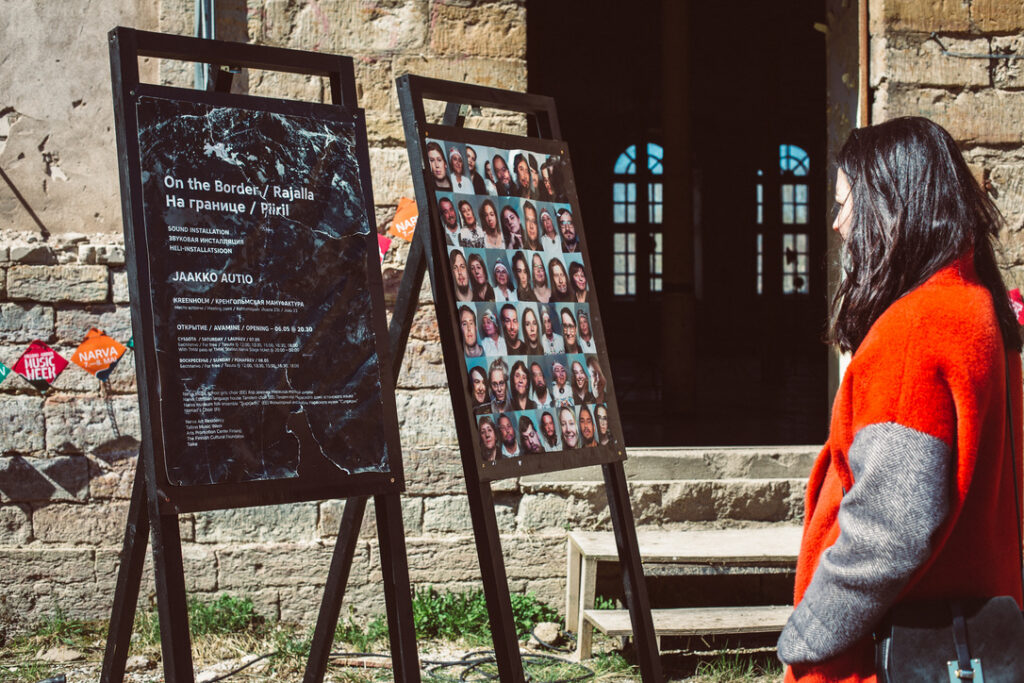
Exhibition information and portraits, Narva, 2022. Photo: Diana Didyk / Design Cafe
NART made this work possible not only by providing time and space, but by helping form relationships with singers, choirs and people in Narva. The residency allowed the work to grow from actual encounters rather than an idea imposed upon the city.
III — CIRCULATION, 2022 – 2023
The first installations were presented at Kreenholm and NART Gallery. The work later travelled to Kogo Gallery in Tartu, the World Cities Culture Summit at the Finnish National Opera in Helsinki, and Porvoo Art Factory. The spatial form changed with each architecture. At Kogo, voices hovered above a circular surface of water. At the Opera House, the loudspeakers formed a line through a bright public interior. At Porvoo Art Factory, the forty-channel work rose vertically into the height of the space.
“But the residency did not end when I left Narva.”
IV — ORIGINATION, 2023
In 2023 I returned to record young pop and jazz singers for the second part, OrigiNation. This time I was interested in improvisation and in the resistance we sometimes feel when asked to act freely. When I invited the singers to improvise, they replied: “We can improvise if you give us the sheet music for it.”
The sentence was funny, but it also contained the central question of the work. Freedom is not necessarily instinctive. Perhaps it has to be learned. At Joensuu Art Museum, the installation became quieter than On the Border. There was less catharsis and more searching. Individual voices emerged, crossed and dissolved throughout the museum.
V — HARMONY IN DISPLACEMENT, JOUTSA
The third part, Harmony in Displacement, moved to Joutsa, Finland, where I worked with Ukrainian refugees and local residents. Twenty people gathered to sing an old Ukrainian lullaby. Each voice again had its own loudspeaker. I used the recording without correcting away its ordinary details: hesitation, laughter, linguistic confusion and the gradual formation of trust. Instead of trying to address geopolitics as a whole, the work asked what can happen when people remain together long enough to listen.
VI — POSSIBLE WORLDS, 2024– 2025
For the fourth part, Possible Worlds, I returned once more to NART. Conversations in Narva made me aware of how differently the same history can be inhabited. Some people thought in Russian but felt Estonian; others described the reverse. Memories of the Soviet Union extended beyond territory into images of space travel and worlds that no longer existed. No one shared a single account of home, yet the conversation held.
This experience became the structure of the final exhibition. I created an object that appeared circular from one viewpoint and square from another. Both perceptions were true, but neither revealed the whole form.
“The question was no longer: which world is correct? It was: from where are you looking?”
The Border Series began in Narva as an attempt to understand geopolitics. Over four years, it became a study of listening, proximity and the ability to remain present without forcing agreement. NART was not simply the location of the first work. Narva became a place to which the series needed to return in order to understand itself.
In 2026, an audio paper proposal tracing the four-part series was shortlisted by Seismograf Peer for its Aesthetic Alliances call. The questions that began at NART are still active and are now moving into another form.
For an artist considering the Finnish Cultural Foundation residency, this is what I would emphasise: a residency can become much more than the work completed during those three months. I t can begin relationships, questions and artistic processes that continue for years. NART gave me access to a place I could not have understood from a distance, while allowing enough openness for the work to change direction.
What began there also shaped a method I continue to use: arrive, listen and allow the particular conditions of a place to determine the form before deciding what the work should become.
“Sometimes the most important result of a residency is not an answer. It is a question strong enough to keep bringing you back.”
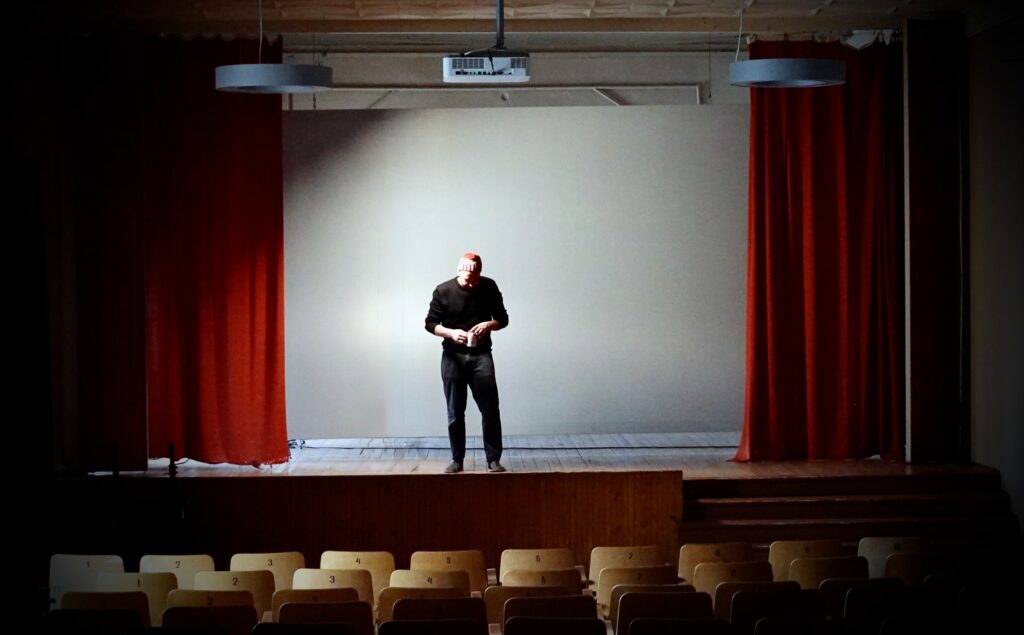
NART Cinema Hall. Artist standing. Photo: Jaakko Autio.