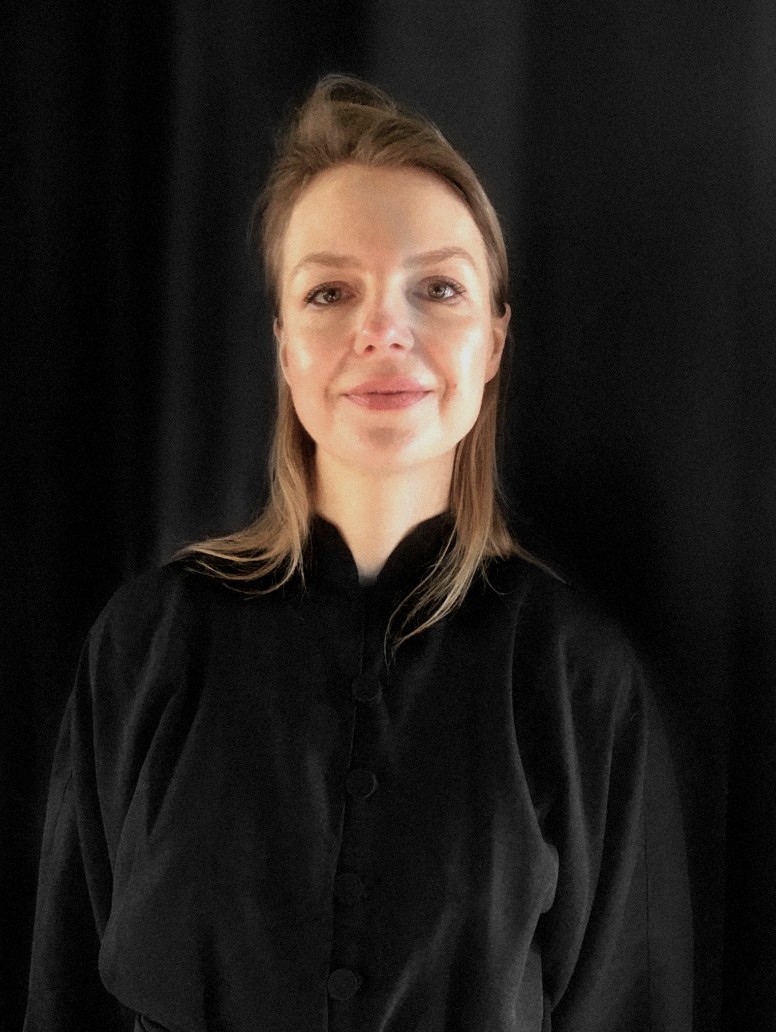
Weronika Trojańska ⎜Finno-Ugric Creative Residency (Poland)
12.11 – 22.12.2025
Bio
Weronika Trojańska is a Polish interdisciplinary artist working with sound, embodiment, and the politics of appropriation. She holds an MA from the Academy of Fine Arts in Poznań and the Sandberg Instituut in Amsterdam. Oscillating between performance and sound installation, she explores the psychoacoustics of the human body—the musicality of speech, silence, and laughter—and how these shape social identity. She often invites others into her process, creating shared spaces that question the roles of artist, audience, and artwork. Her work has been shown at Kunstgewerbemuseum (Berlin), Pawilon (Poznań), Port25 (Mannheim) and BWABydgoszcz, EYE Filmmuseum (Amsterdam), MoMA, Emily Harvey Foundation, Rongwrong (Amsterdam), among others. In 2017, Trojańska also performed Yoko Ono historical Cut Piece at the Museum der Moderne in Salzburg. She has also published texts in a number of Polish and English-language art magazines (including OnCurating, Metropolis M and Arterritory.com). She is currently a PhD candidate at the Eugeniusz Geppert Academy of Art and Design in Wrocław.
Project
During the residency, I explored Finno-Ugric laments as embodied practices guiding people through life’s thresholds and collective ruptures. Found among Ingrians, Izhorians, Karelians, Mordvins, Setos, Veps, and Votians, these laments accompany events such as death and weddings, expressing life’s cyclical nature where grief and transformation coexist.
Lamenting cannot be memorized or performed on demand; it emerges spontaneously in response to loss or transition. Traditionally carried by elderly women as bearers of ancestral knowledge, these practices have gradually faded due to institutionalized rites, stigma around public grief, political repression, and the devaluation of women’s knowledge.
Drawing on fieldwork, archival recordings, and local histories from Narva and its surroundings, I created a sound installation using my own voice. Lament for the Unvoiced reactivates lament as emotional ecology, spiritual transformation, and a social rhythm in times of change. Without fixed words, it approaches lament as a bodily practice where breath and trembling voice connect the individual with their surroundings and shared memory.
The project invites reflection on what remains unvoiced today and encourages audiences to listen, attune, and consider what still calls for mourning.
Weronika residency was supported by the Cultural Endowment of Estonia.